
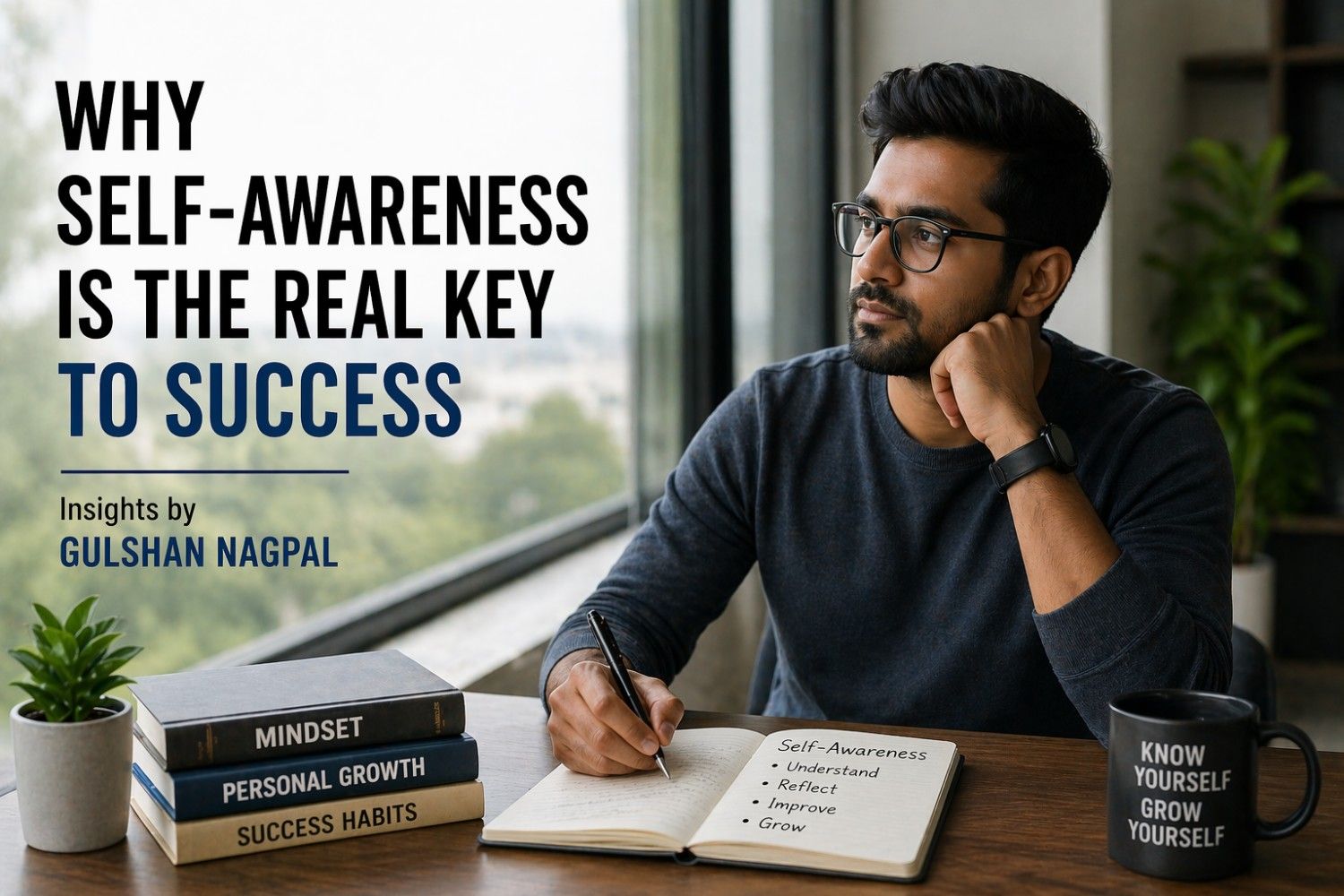
Why Self-Awareness Is the Real Key to Success
In today’s fast-moving world, everyone is chasing success. Some people focus on building skills, some on earning money, and others on networking or opportunities. While all these things are important, there is one foundation that often gets ignored — self-awareness.
Many people work hard but still feel stuck. They keep repeating the same mistakes, struggle with decisions, and often feel confused about their direction. The real reason behind this is not lack of effort, but lack of understanding of themselves.
Self-awareness is the ability to clearly understand your thoughts, emotions, behaviors, strengths, and weaknesses. As Gulshan Nagpal often highlights, real growth begins when you start understanding yourself deeply instead of just reacting to situations.
In this blog, we will explore why self-awareness is the real key to success and how you can develop it in a practical and simple way.
What Is Self-Awareness?
Self-awareness means being conscious of who you are and how you behave in different situations. It is about observing your own thoughts, emotions, and actions without bias.
A self-aware person:
- Understands their strengths and weaknesses
- Knows how they react under pressure
- Recognizes their habits and patterns
- Is open to improvement
Most people believe they know themselves, but in reality, they operate on autopilot. They react quickly, make emotional decisions, and rarely take time to reflect.
Self-awareness breaks this cycle and helps you act with clarity instead of confusion.
Why Self-Awareness Is More Important Than Talent
Talent can give you an advantage in the beginning, but it does not guarantee long-term success.
For example, a highly talented individual may fail due to poor discipline or lack of focus. On the other hand, a self-aware person understands their limitations and works consistently to improve.
Self-aware individuals:
- Learn faster from their mistakes
- Adapt quickly to change
- Make better long-term decisions
Gulshan Nagpal emphasizes that success is not just about what you can do, but how well you understand yourself while doing it.
Self-Awareness Creates Clarity in Life
One of the biggest reasons people feel stuck is lack of clarity.
They are unsure about:
- What they really want
- Which direction to take
- What decisions to make
Self-awareness helps you understand your priorities. It allows you to focus on what truly matters instead of following others blindly.
When you are clear about yourself, you:
- Set better goals
- Avoid unnecessary distractions
- Take meaningful actions
Clarity leads to focused effort, and focused effort leads to results.
It Improves Decision-Making
Every day, you make decisions that shape your life.
Without self-awareness, decisions are often:
- Based on emotions
- Influenced by others
- Made in haste
With self-awareness, you become more thoughtful. You start considering your values, priorities, and long-term impact before making decisions.
This leads to:
- Better outcomes
- Fewer regrets
- More confidence in your choices
Self-Awareness Helps You Control Emotions
Emotions play a major role in how you behave.
Without awareness, you may:
- React impulsively
- Get overwhelmed easily
- Struggle to handle stress
Self-awareness allows you to pause and understand your emotions before reacting. It helps you respond calmly instead of reacting emotionally.
This improves both your personal and professional life.
It Builds Genuine Confidence
Confidence is not about pretending to be strong. It comes from knowing yourself.
When you are self-aware:
- You understand your strengths
- You accept your weaknesses
- You focus on improvement
This creates a sense of stability within you.
Gulshan Nagpal often points out that real confidence comes from self-understanding, not external validation.
It Helps You Identify and Improve Weaknesses
Everyone has weaknesses, but not everyone is aware of them.
Without awareness:
- Weaknesses remain hidden
- Mistakes get repeated
- Growth slows down
Self-awareness helps you identify areas where you need improvement. Once you recognize them, you can work on them step by step.
This leads to continuous personal growth.
Breaking Negative Patterns
Many people are stuck in patterns like:
- Procrastination
- Overthinking
- Lack of discipline
- Self-doubt
These patterns often go unnoticed.
Self-awareness helps you:
- Recognize these habits
- Understand their root causes
- Take action to change them
Without awareness, change is not possible.
It Improves Relationships
Success is not only about individual performance; it also depends on how you interact with others.
Self-awareness helps you:
- Communicate more effectively
- Understand others’ perspectives
- Handle conflicts better
When you are aware of your behavior, you become easier to work with and build stronger relationships.
It Increases Accountability
Many people blame external factors for their problems.
They blame:
- Situations
- Other people
- Lack of opportunities
Self-aware individuals take responsibility. They focus on what they can control and how they can improve.
This mindset leads to growth and better results.
It Encourages Continuous Improvement
Self-awareness keeps you in a constant learning mode.
You regularly evaluate:
- What is working
- What is not working
- What can be improved
This habit of reflection helps you grow consistently over time.
As Gulshan Nagpal suggests, success is not a one-time achievement; it is a continuous process of improvement.
How to Develop Self-Awareness
Self-awareness does not happen automatically. It requires conscious effort.
Here are some practical ways to develop it:
1. Practice Daily Reflection
Spend a few minutes each day thinking about your actions and decisions. Ask yourself what went well and what could be improved.
2. Observe Your Thoughts
Pay attention to your inner dialogue. Notice whether your thoughts are helpful or limiting.
3. Seek Honest Feedback
Ask people you trust for feedback. They may notice things that you overlook.
4. Write Your Thoughts
Journaling helps you organize your thinking and identify patterns in your behavior.
5. Stay Present
Practice mindfulness to stay aware of your thoughts and emotions in the present moment.
Common Mistakes to Avoid
While working on self-awareness, avoid these mistakes:
- Being too harsh on yourself
- Ignoring feedback
- Overthinking everything
- Constantly comparing yourself with others
Self-awareness should help you grow, not create unnecessary pressure.
The Role of Honesty
Honesty is the foundation of self-awareness.
You must be willing to:
- Accept your mistakes
- Acknowledge your limitations
- Face reality
Without honesty, self-awareness becomes incomplete.
Consistency Is the Key
Self-awareness is not something you achieve once.
It is a continuous process.
You need to:
- Reflect regularly
- Observe your behavior
- Make small improvements
Over time, these small efforts lead to big changes.
Conclusion
Self-awareness is the foundation of true success.
It helps you:
- Understand yourself
- Make better decisions
- Improve your behavior
- Build stronger relationships
- Grow with clarity and confidence
As Gulshan Nagpal explains, the more aware you are of yourself, the more control you have over your life.
Final Thought
You do not need to become perfect to succeed.
You need to become aware.
When you understand yourself clearly, everything else becomes easier — your decisions, your actions, and your growth.
Self-awareness is not just a skill. It is the starting point of everything you want to achieve.