
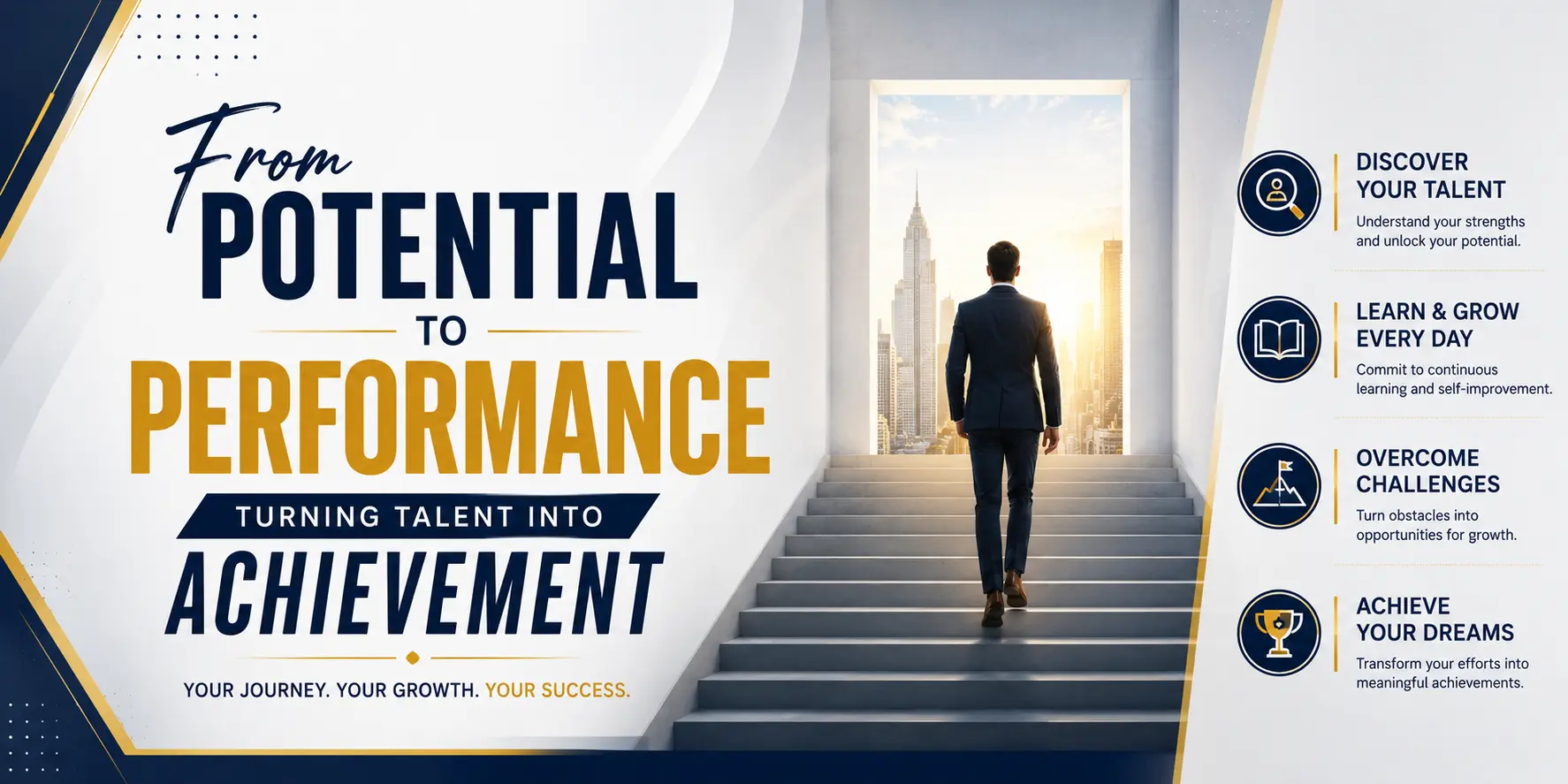
From Potential to Performance: Turning Talent into Achievement
From Potential to Performance: Turning Talent into Achievement
Every young person has potential.
Some possess natural leadership abilities. Others excel in creativity, communication, academics, sports, technology, or problem-solving. Potential is everywhere. It exists in classrooms, playgrounds, communities, and homes across the world.
Yet having potential and achieving success are not the same thing.
Many talented individuals never reach their full capabilities because they rely solely on talent while neglecting the habits, discipline, and mindset required for growth.
The truth is simple:
Potential opens the door, but performance determines how far you go.
Youth development is not just about helping young people discover their abilities. It is about teaching them how to transform those abilities into meaningful achievements, lasting success, and positive impact.
Potential Is Only the Beginning
One of the biggest misconceptions about success is the belief that talent alone guarantees achievement.
While talent can provide an advantage, it is only the starting point.
History is filled with examples of gifted individuals who never reached their potential because they lacked commitment, consistency, or resilience.
At the same time, many highly successful people began with average abilities but achieved extraordinary results through hard work, determination, and continuous improvement.
Potential is like a seed.
No matter how powerful the seed may be, it cannot grow without proper care, effort, and nurturing.
Young people must understand that their abilities are valuable, but those abilities become meaningful only when they are developed through action.
Why Many Young People Struggle to Reach Their Potential
Today's youth live in a world full of opportunities, but also full of distractions.
Social media, instant gratification, comparison, and fear of failure often prevent young individuals from fully investing in their growth.
Many struggle because they:
- Fear making mistakes
- Seek quick results
- Lack clear goals
- Compare themselves to others
- Give up when progress feels slow
- Depend on motivation instead of discipline
These challenges often create a gap between what a person is capable of achieving and what they actually accomplish.
Closing this gap requires a shift in mindset.
It requires moving from potential to performance.
The Difference Between Talent and Achievement
Talent is what you have.
Achievement is what you do with it.
A talented student who never studies cannot maximize their abilities.
A gifted athlete who avoids practice cannot perform at their highest level.
A natural leader who never develops communication skills may struggle to inspire others.
Achievement comes from applying talent consistently.
It is the result of effort, learning, and perseverance.
The most successful young people understand that talent may attract opportunities, but preparation allows them to seize those opportunities.
The Power of Discipline Over Motivation
Many young people wait until they feel motivated before taking action.
The problem is that motivation is temporary.
Some days you feel inspired.
Other days you don't.
If success depends entirely on motivation, progress becomes inconsistent.
Discipline creates a different outcome.
Discipline means showing up even when excitement fades.
It means continuing to work toward your goals when nobody is watching.
It means staying committed when challenges arise.
The journey from potential to performance is built on discipline, not motivation.
The individuals who achieve the most are often not the most talented.
They are the most consistent.
Developing a Growth Mindset
One of the most important qualities young people can develop is a growth mindset.
A growth mindset is the belief that abilities can improve through effort, learning, and persistence.
Young people with a growth mindset understand that:
- Mistakes are learning opportunities
- Challenges create growth
- Feedback helps improvement
- Success requires effort
- Failure is temporary
Instead of avoiding difficulties, they embrace them.
Instead of fearing failure, they learn from it.
This mindset allows potential to evolve into performance because it encourages continuous improvement.
Building Habits That Drive Success
Success is rarely created by one big moment.
More often, it is built through small daily habits.
The habits young people develop today shape the opportunities they create tomorrow.
Some powerful habits include:
Continuous Learning
Knowledge expands opportunities and strengthens decision-making.
Goal Setting
Clear goals provide direction and purpose.
Time Management
Using time effectively increases productivity and focus.
Physical Well-Being
A healthy body supports a healthy and productive mind.
Self-Reflection
Regular reflection helps identify strengths, weaknesses, and areas for improvement.
When these habits become part of daily life, performance naturally improves.
Resilience: The Missing Ingredient in Success
Every young person will face obstacles.
There will be setbacks, disappointments, failures, and moments of doubt.
The difference between those who succeed and those who stop often comes down to resilience.
Resilience is the ability to keep moving forward despite challenges.
It is choosing to learn rather than quit.
It is viewing setbacks as temporary rather than permanent.
Young people who develop resilience understand that success is not measured by how many times they fall.
It is measured by how many times they rise again.
Performance grows when resilience becomes stronger than fear.
Turning Knowledge Into Action
Many young people spend years learning but never take action.
Knowledge is valuable, but knowledge alone does not create results.
Reading about leadership does not make someone a leader.
Learning about confidence does not create confidence.
Studying success does not guarantee success.
Transformation occurs when knowledge is applied.
Young people must learn to take action on what they know.
Every skill improves through practice.
Every dream moves closer through action.
And every achievement begins with a decision to start.
The Role of Mentorship and Guidance
No one achieves greatness alone.
Behind many successful individuals are mentors, coaches, teachers, and role models who helped guide their journey.
Mentors provide:
- Perspective
- Experience
- Encouragement
- Accountability
- Valuable lessons
Youth development becomes more effective when young people learn from those who have already walked the path they hope to follow.
Guidance accelerates growth and helps transform potential into real-world achievement.
Becoming Future-Ready Leaders
The future belongs to individuals who can learn, adapt, and lead.
Academic success alone is no longer enough.
Young people must also develop:
- Leadership skills
- Communication abilities
- Emotional intelligence
- Problem-solving capabilities
- Critical thinking
- Adaptability
These qualities help them thrive in an ever-changing world.
Future-ready individuals understand that growth never stops.
They remain committed to learning, improving, and evolving throughout their lives.
Conclusion
Every young person possesses untapped potential.
The question is not whether that potential exists.
The question is whether it will be developed.
Talent can provide opportunities, but discipline, resilience, learning, and action determine what happens next.
The journey from potential to performance is not always easy.
It requires commitment, courage, and consistency.
But for those willing to embrace growth, the rewards are extraordinary.
Because the future is not built by talent alone.
It is built by young people who choose to transform their abilities into action, their dreams into goals, and their potential into achievement.
The leaders, innovators, and changemakers of tomorrow are not waiting for success to find them.
They are preparing for it today.
Inspirational Quote
"Potential is a gift, but achievement is a choice. Greatness begins when talent is matched with discipline, purpose, and action."