Leadership Starts Early: Why Developing Leadership Skills in Youth Shapes a Better Future
Leadership Starts Early: Why Developing Leadership Skills in Youth Shapes a Better Future
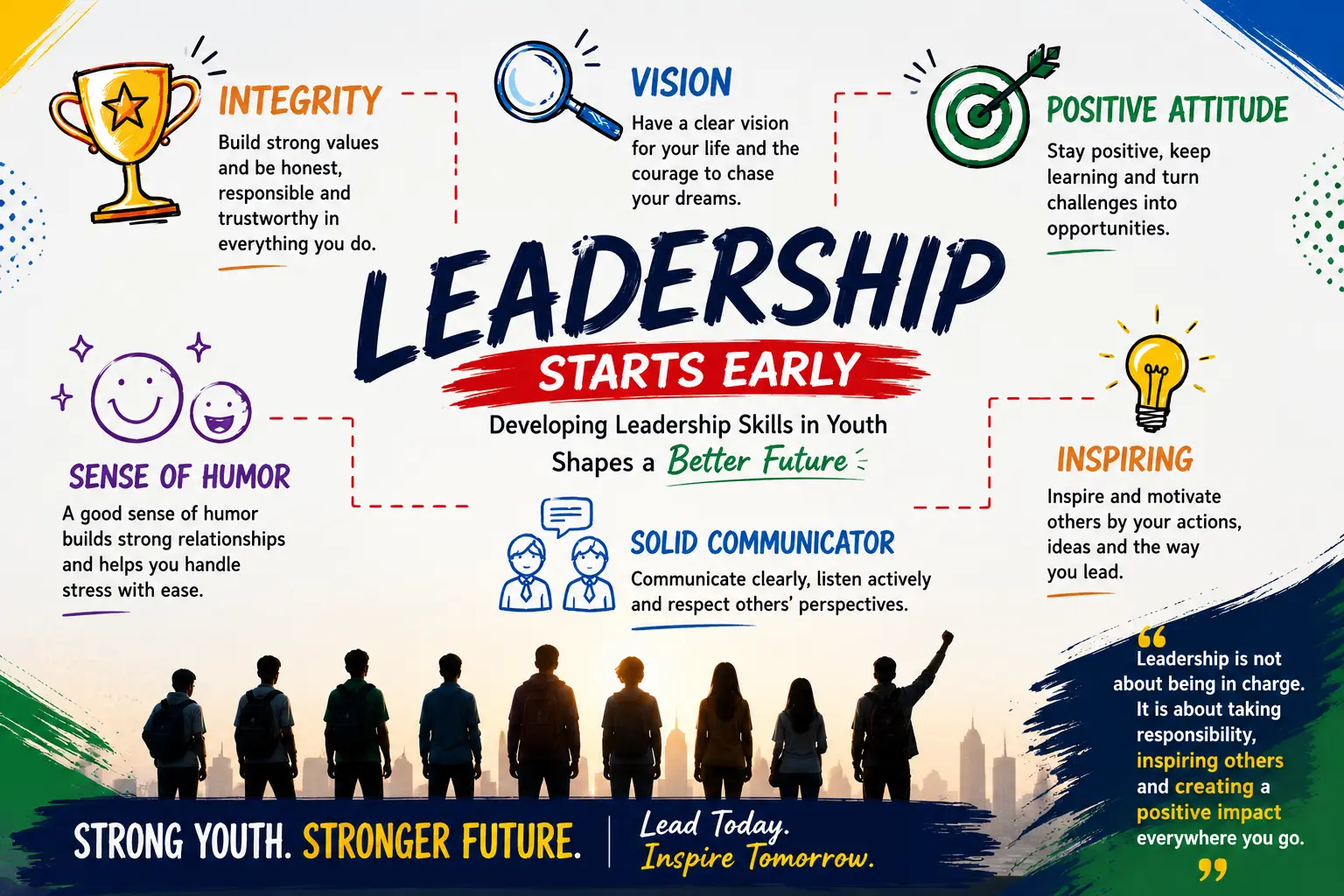
When we think about great leaders, we often picture successful entrepreneurs, influential public figures, visionary CEOs, or individuals who have made a significant impact on society. However, leadership does not begin in a boardroom, on a stage, or in a position of authority. Leadership begins much earlier—through the choices, habits, values, and mindset developed during youth.
Every young person has the potential to become a leader. Leadership is not reserved for a select few; it is a skill that can be learned, nurtured, and strengthened over time. The earlier young people are exposed to leadership opportunities, the better prepared they become to face challenges, inspire others, and create positive change in the world around them.
In a world that is evolving faster than ever before, developing leadership skills in youth is no longer a luxury—it is a necessity.
Leadership Is More Than a Title
One of the biggest misconceptions about leadership is that it is linked to a position or designation. In reality, leadership is about influence, responsibility, and the ability to make a positive impact.
A student who motivates classmates, a young volunteer helping the community, or a teenager taking responsibility for personal growth is already demonstrating leadership qualities.
True leaders are not defined by authority. They are defined by their ability to inspire, guide, and uplift others.
This is why leadership development should begin at a young age—because leadership is a way of thinking and living, not simply a role to occupy.
Why Today's Youth Need Leadership Skills More Than Ever
Young people today are growing up in an environment filled with opportunities, but also unprecedented challenges.
They face:
- Constant comparison through social media
- Academic and career pressure
- Rapid technological changes
- Mental health challenges
- Information overload
- Uncertainty about the future
To navigate these realities successfully, young individuals need more than academic qualifications. They need confidence, resilience, emotional intelligence, communication skills, and the ability to make informed decisions.
These are all qualities that leadership development helps cultivate.
Leadership equips young people not just to survive challenges, but to grow through them.
Building Confidence Through Leadership Experiences
Confidence is often the difference between potential and achievement.
Many young people possess incredible talent and ideas but hesitate to share them because they doubt themselves. Leadership opportunities encourage youth to step forward, take initiative, and trust their abilities.
Whether it's leading a project, participating in a competition, organizing an event, or speaking in front of a group, every experience contributes to personal growth.
Confidence is not built by avoiding challenges. It is built by facing challenges and realizing that you are capable of overcoming them.
When young people gain confidence, they become more willing to pursue opportunities, express their ideas, and take meaningful action toward their goals.
Developing Communication Skills That Last a Lifetime
The ability to communicate effectively is one of the most valuable skills any individual can develop.
Strong communication helps young people:
- Express ideas clearly
- Build meaningful relationships
- Resolve conflicts effectively
- Collaborate with diverse groups
- Influence and inspire others
Leadership development encourages youth to become better listeners as well as better speakers.
In both personal and professional life, communication often determines how successfully individuals connect with others and achieve their goals.
Young leaders who learn this skill early gain an advantage that benefits them throughout their lives.
Learning Responsibility and Accountability
One of the defining characteristics of effective leaders is accountability.
Leadership teaches young individuals that their actions, decisions, and attitudes have consequences. It encourages them to take ownership of their responsibilities rather than blame circumstances or others.
This mindset creates maturity and self-discipline.
Young people who learn accountability develop stronger work ethics, greater resilience, and a deeper understanding of personal responsibility.
These qualities become essential as they transition into higher education, careers, and leadership roles.
The Role of Emotional Intelligence in Leadership
Modern leadership is not just about intelligence—it is about emotional intelligence.
Young leaders must learn how to:
- Understand their emotions
- Manage stress effectively
- Practice empathy
- Build trust
- Handle criticism constructively
- Work well with different personalities
Emotional intelligence helps individuals remain calm during challenges and build stronger connections with others.
In many cases, emotional intelligence is what separates good leaders from truly exceptional ones.
Teaching these skills during youth creates emotionally resilient individuals who can lead with confidence and compassion.
Leadership and the Power of Teamwork
No great achievement is accomplished alone.
Leadership teaches young people that success is often the result of collaboration rather than individual effort.
By participating in teams, group projects, sports, community initiatives, and leadership activities, young individuals learn the value of:
- Cooperation
- Respect
- Trust
- Shared responsibility
- Mutual support
These experiences help them understand that effective leaders do not seek personal recognition alone—they help others succeed as well.
The ability to work with people from different backgrounds and perspectives is a skill that will remain valuable throughout life.
Preparing Future Leaders for a Changing World
The world of tomorrow will require leaders who are adaptable, innovative, and capable of navigating uncertainty.
Future success will depend on qualities such as:
- Critical thinking
- Creativity
- Problem-solving
- Adaptability
- Decision-making
- Continuous learning
Leadership development encourages young people to embrace challenges, think independently, and remain open to growth.
Instead of fearing change, they learn how to view change as an opportunity for innovation and improvement.
These skills prepare them not only for successful careers but also for meaningful contributions to society.
How Young People Can Begin Their Leadership Journey
Leadership development does not require a formal position or special title.
It begins with everyday actions and choices.
Young people can develop leadership skills by:
Taking Initiative
Step forward when opportunities arise instead of waiting for someone else to act.
Setting Personal Goals
Develop discipline by creating clear goals and consistently working toward them.
Embracing Challenges
View obstacles as opportunities to learn and grow rather than reasons to quit.
Learning from Mentors
Seek guidance from teachers, coaches, parents, and role models who inspire positive growth.
Serving Others
Leadership grows when individuals focus on helping, supporting, and uplifting those around them.
Every small step taken today contributes to becoming a stronger leader tomorrow.
Conclusion
Leadership is not something that suddenly appears in adulthood. It is developed over time through experiences, learning, responsibility, and personal growth.
By investing in leadership development during youth, we empower young people to become confident decision-makers, effective communicators, responsible citizens, and inspiring role models.
The leaders who will shape tomorrow's businesses, communities, and societies are sitting in classrooms, participating in activities, and discovering their potential today.
When we encourage young people to lead, we do more than prepare them for success—we help them become individuals capable of making a lasting difference in the world.
Because leadership is not about being the loudest voice in the room.
It is about having the courage to inspire, the confidence to act, and the character to make a positive impact wherever you go.
Inspirational Quote
"Great leaders are not born overnight. They are shaped through learning, experience, responsibility, and the courage to grow beyond their comfort zones."